Review: Tropical Flowers Mug Sublimation Design
As a designer who spends most of my day staring at digitized files and thread charts, I approach every new asset with a critical eye. We often get caught up in the hype of "instant download" graphics, but when you are running a craft business or fulfilling orders for an Etsy seller account, the quality of your source material dictates the success of your finished product. Recently, I evaluated the Mug Sublimation Design tropical Flowers to see if it holds up not just as a digital image, but as a viable component for real-world handmade projects. While this specific file is marketed as a PNG for sublimation, understanding its visual language is crucial for anyone looking to integrate tropical themes into their broader catalog of design assets.
First Impressions and Visual Personality
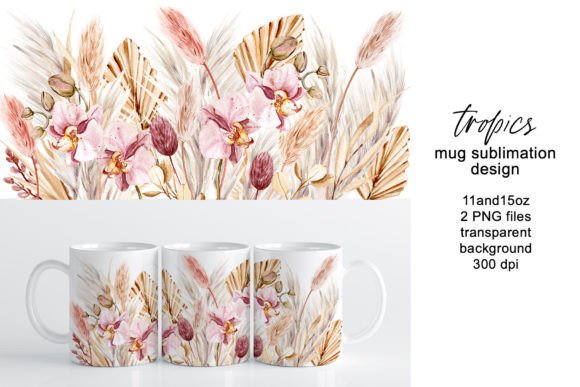
Upon opening the file, the immediate takeaway is the vibrancy. The description promises a "bright design," and it delivers. The watercolor style offers a softness that rigid vector art often lacks, creating a mood that is relaxed, summery, and inviting. For an embroidery designer, this aesthetic translates well into specific stitch types. The bleeding edges of a watercolor look are perfectly suited for satin stitch borders or a lighter fill stitch density that allows the fabric texture to peek through, mimicking the transparency of the original artwork.
The layout, sized at 8.75 x 3.75 inches, is panoramic. This is an unusual aspect ratio for standard hoop work but excellent for wide applications. In the context of Illustrations and Graphics, this shape suggests movement and flow. It feels less like a static logo and more like a decorative band. If you were to adapt this visual theme into a machine embroidery design, the horizontal spread would look stunning across the chest of a sweatshirt or wrapping around a large tote bag. The color palette implies a need for high-quality rayon or polyester threads to capture those subtle gradients without losing definition.
Real-World Application Scenarios
To truly test the viability of a design, I mentally place it into active production scenarios. Imagine a client requests a set of matching items for a destination wedding or a summer boutique launch. The Mug Sublimation Design tropical Flowers serves as an excellent reference point for the overall brand aesthetic. Even though the file itself is a PNG for mugs, the visual components can inspire a coordinated custom apparel line.
For instance, consider a tote bag design. A canvas tote provides a stable, non-stretchy surface that handles detailed imagery well. If you were to use this graphic as a transfer or adapt its elements into an embroidered patch, the tropical flowers would pop against natural cotton or heavy denim. Similarly, for sweatshirt embroidery, the wide format fits perfectly above the pocket or across the upper back. The organic shapes of the flowers soften the look of heavy fleece, making it appealing for casual wear.
Beyond apparel, think about home goods. A pillow cover or a kitchen tea towel could benefit from this motif. However, one must be realistic about the medium. Since this is a sublimation-ready PNG, it shines on polymer-coated surfaces. But for the textile entrepreneur, the lesson here is about consistency. Using the same tropical flower motif on a mug (via sublimation) and a matching apron (via embroidery or heat transfer vinyl based on the graphic) creates a cohesive small shop product line that builds customer trust.
Technical Considerations for Embroidery Adaptation
If you plan to use the visual style of Mug Sublimation Design tropical Flowers to create or commission a corresponding embroidery file, there are technical hurdles to clear. Watercolor effects rely on soft blends, which are notoriously difficult to replicate with thread. A direct conversion often results in a muddy mess if the stitch density is too high. You would need to simplify the design, perhaps opting for an applique design approach where solid fabric pieces represent the flower petals, outlined with a clean satin stitch.
Caution is required when working with small details. The original graphic likely contains fine lines and subtle color shifts that do not translate to running stitch or small fill areas on textured fabrics. If you are stitching on a textured fabric like a waffle weave towel or a rough linen, those tiny details will get lost. Furthermore, curved surfaces like caps present a challenge. The 8.75-inch width is far too wide for a standard cap front, meaning you would need to isolate a single flower or a small cluster from the larger composition to make it work as baby embroidery on a hat or a pocket logo.
Fabric choice is paramount. On dark fabric, a watercolor-style design needs careful planning. In sublimation, white ink is rarely used, so designs often rely on the substrate color. In embroidery, you must stitch the background or use light-colored threads that might require underlay stabilization to prevent the dark fabric from showing through. Always test on scrap fabric first. Check how the thread colors contrast against your specific material. What looks vibrant on a screen might look dull on a heather grey sweatshirt.
Enhancing Product Value and Branding
The ultimate goal of using high-quality graphics like this is to elevate the perceived value of your handmade product. Customers today are savvy; they can spot a generic clipart job from a mile away. However, a well-integrated tropical theme suggests thoughtfulness and curation. When a buyer sees a mug with this bright floral design paired with a matching embroidered tote, they perceive a complete lifestyle package rather than just a commodity. This boosts buyer engagement and encourages repeat purchases.
For commercial embroidery projects, consistency is key to professionalism. If you are selling printable mockup files or physical goods, ensuring that your digital previews match the stitched reality is vital. The Mug Sublimation Design tropical Flowers offers a strong visual anchor. By maintaining this aesthetic across different product categories—from holiday gifts to everyday personalized gifts—you establish a recognizable brand identity. It tells your customers that you pay attention to detail and care about the cohesiveness of your collection.
Practical Designer Notes
Before committing to a full production run based on this or similar assets, keep these practical steps in mind:
- Verify Licensing: Always confirm the license terms. Just because a file is available for purchase doesn't automatically grant unlimited commercial rights for all derivatives. Ensure you can sell finished items or adapted digital products.
- Check Resolution and Scale: The file is provided as a PNG at 8.75 x 3.75 inches. If you intend to enlarge this for a blanket or shrink it for a napkin, check the DPI to ensure it doesn't become pixelated.
- Stabilizer Selection: If adapting this to embroidery, the choice of stabilizer is critical. For stretchy fabrics like t-shirts, a cut-away stabilizer is usually best to prevent distortion of the floral shapes over time.
- Mockup Testing: Create black and white mockups of the design to check for contrast issues. If the design falls apart in grayscale, it may lack the necessary definition for clear stitching.
- Hoop Size Confirmation: Remember that the panoramic shape may require a large hoop or a multi-hooping strategy if converted to embroidery. Plan your machine setup accordingly.
In conclusion, while the Mug Sublimation Design tropical Flowers is technically a graphic for hard goods, its artistic merit offers significant inspiration for the textile and embroidery community. By understanding its strengths in color and composition, and respecting its limitations regarding detail and fabric interaction, designers can leverage this asset to create stunning, cohesive collections. Whether you are a hobbyist making a personalized gift or a pro managing a craft business, the key lies in thoughtful adaptation and rigorous testing. Treat every digital file as a starting point for creativity, not just a final product, and your embroidery project outcomes will reflect that extra layer of professional care.